
 PearPass
How to Configure Auto Lock
Set the auto-lock timeout to control how long PearPass waits before locking your vault after inactivity, on desktop or mobile.
By default, PearPass locks your vault after 30 seconds of inactivity. Follow the steps below to configure the auto-lock timeout to a different duration.
A longer timeout gives anyone with physical access to your device more time to access your vault without your master password.
Activity in the desktop app keeps the browser extension unlocked, but not vice versa. Mobile auto-lock is completely independent — activity on desktop or in the browser extension has no effect on it.
Available options
| Option | Locks after |
|---|---|
| 30 seconds (default) | 30 seconds of inactivity |
| 1 minute | 1 minute of inactivity |
| 5 minutes | 5 minutes of inactivity |
| 15 minutes | 15 minutes of inactivity |
| 30 minutes | 30 minutes of inactivity |
| 1 hour | 1 hour of inactivity |
| 4 hours | 4 hours of inactivity |
| Never | Locks only when you manually lock it or close the app |
Sign in
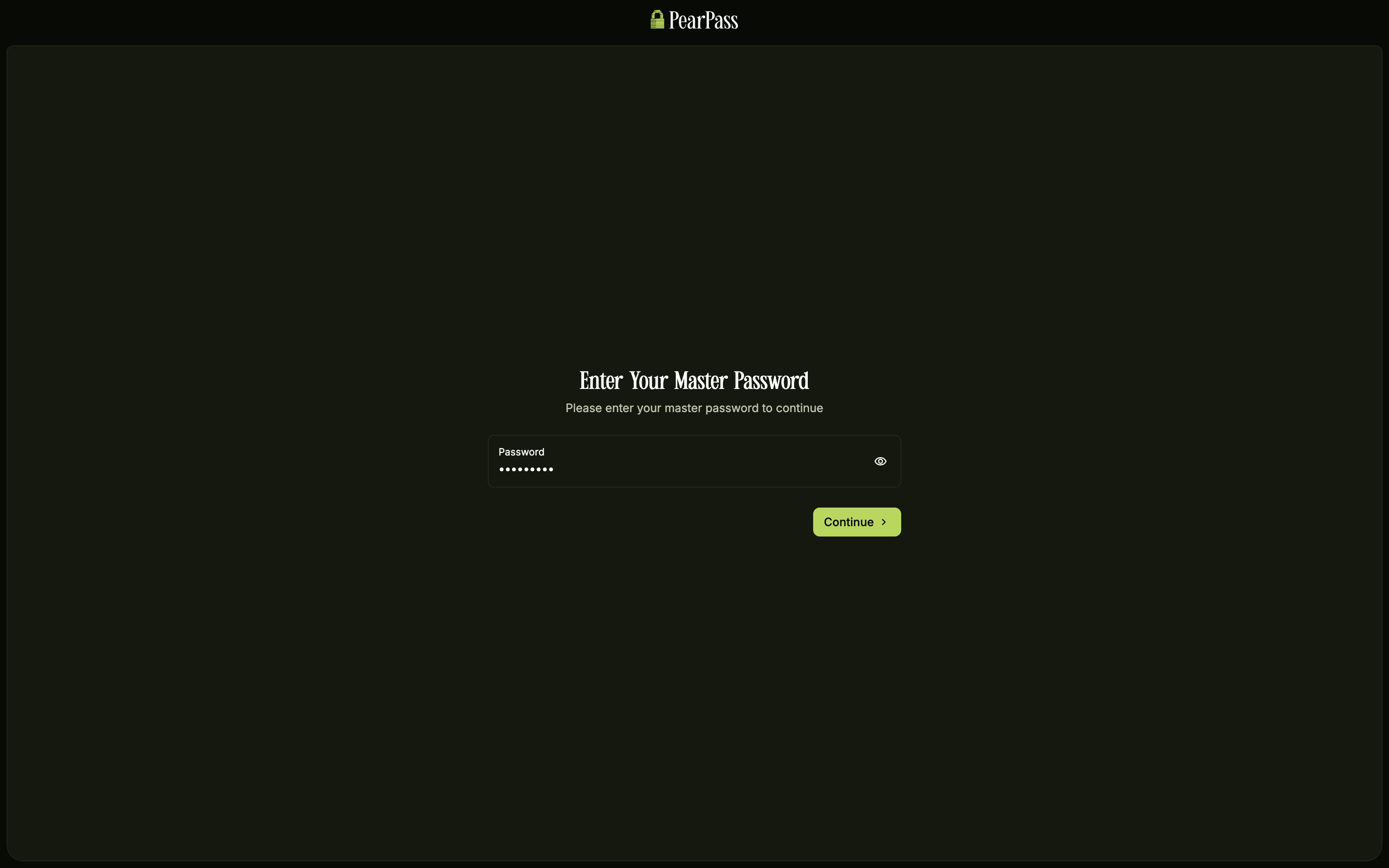
Open PearPass on your computer and sign in with your master password.
Open Settings
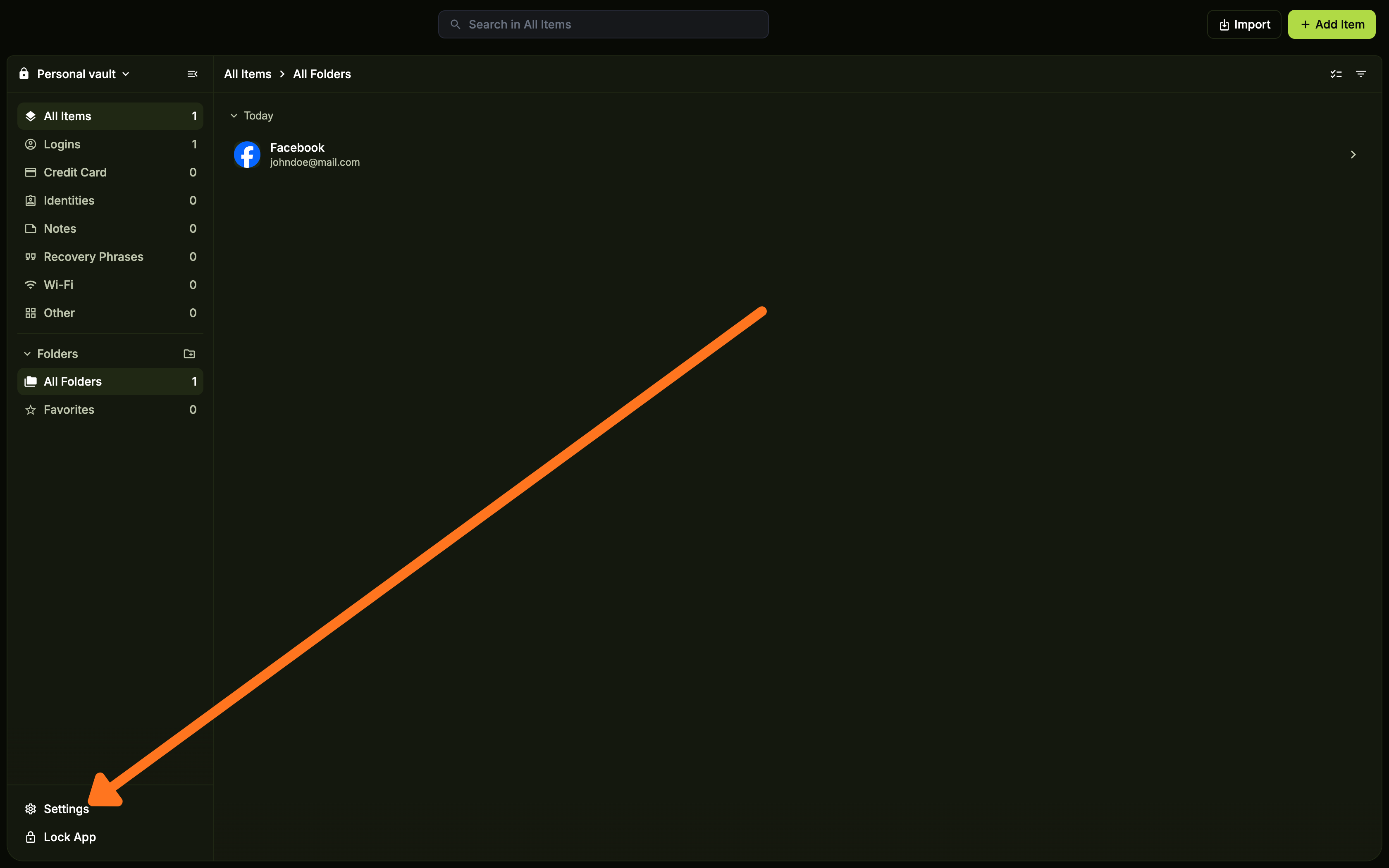
Click Settings.
Set the Auto Lock timeout
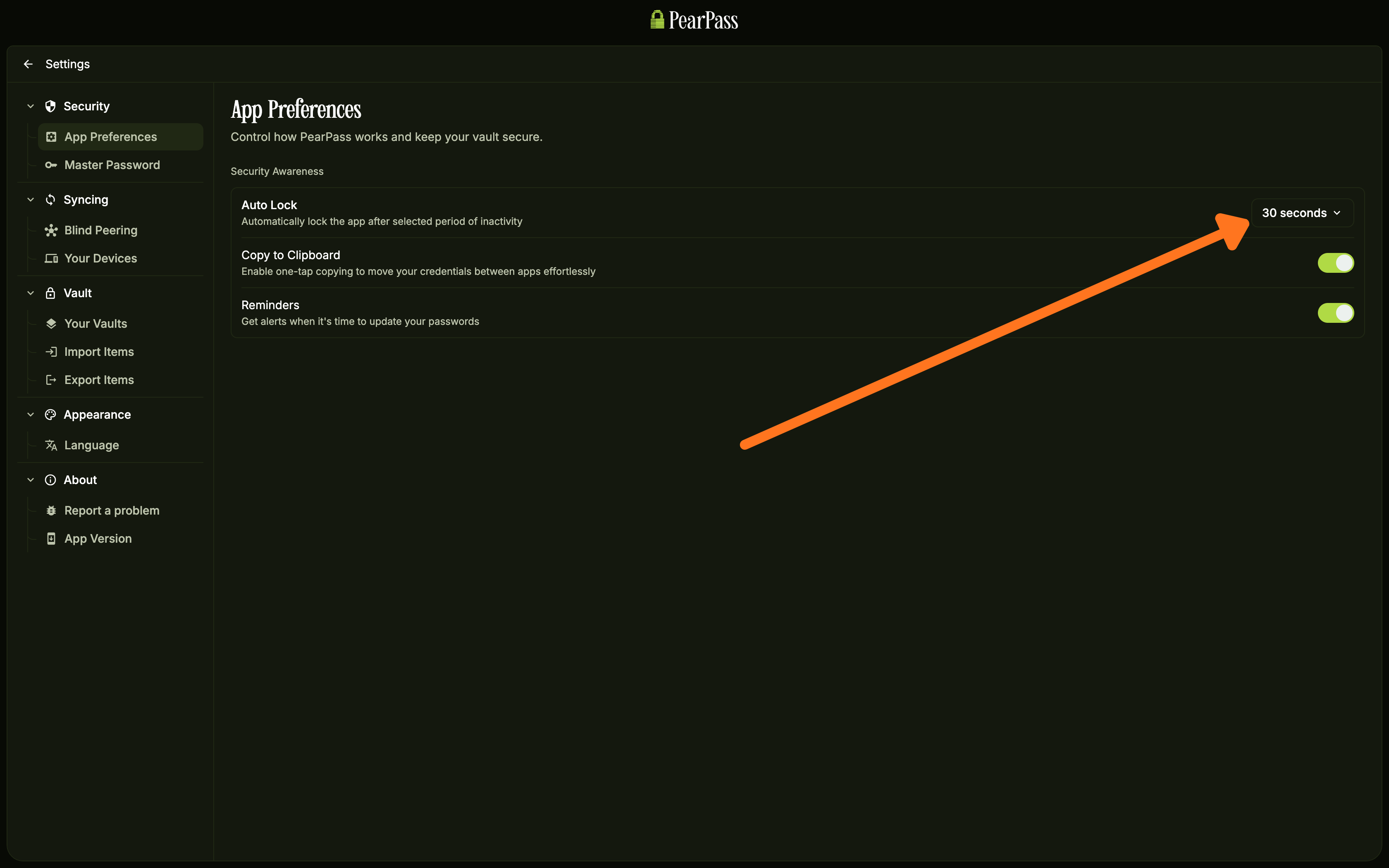
On the side menu bar, under the Security section, click App Preferences. On the App Preferences screen, click the Auto Lock dropdown and select the timeout that works for you.
Sign in
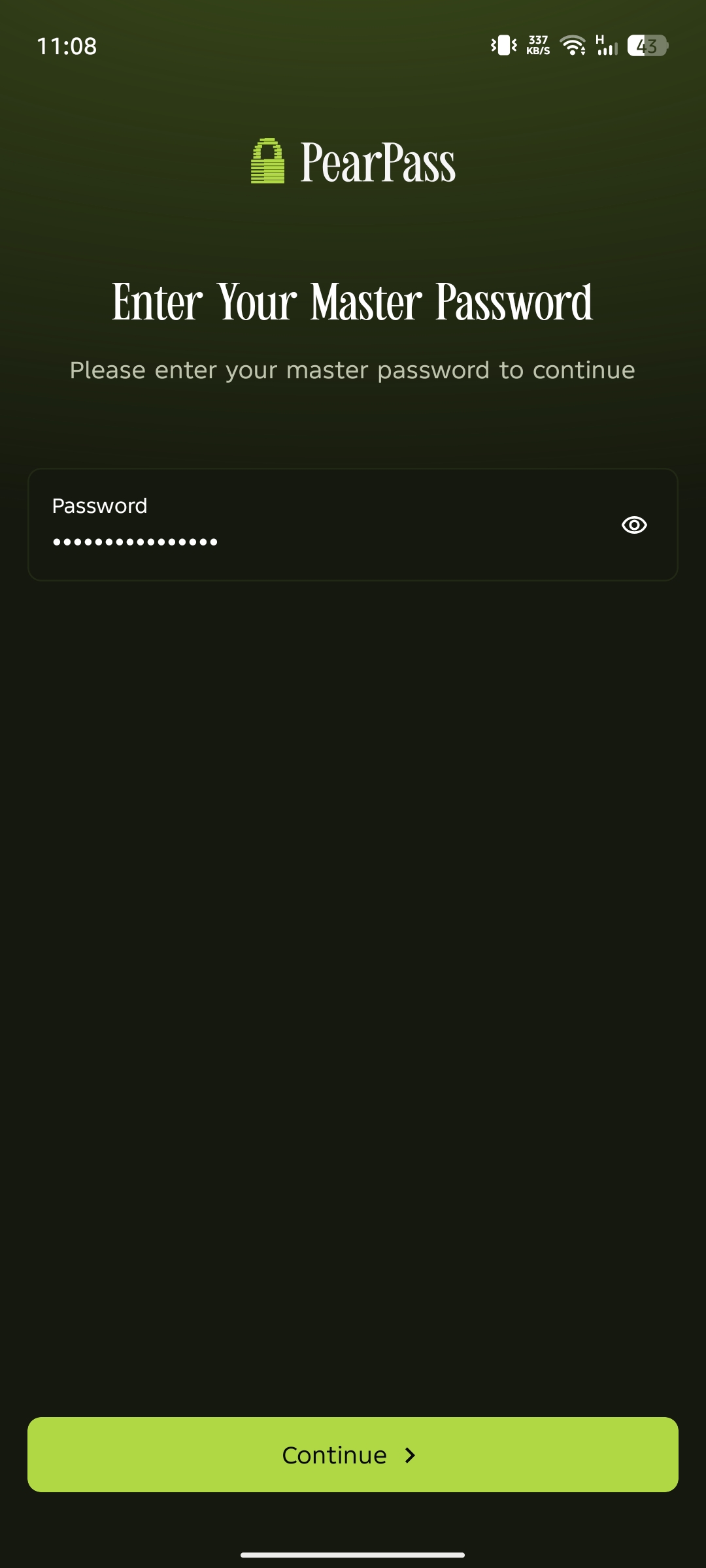
Open PearPass on your mobile device and sign in with your master password.
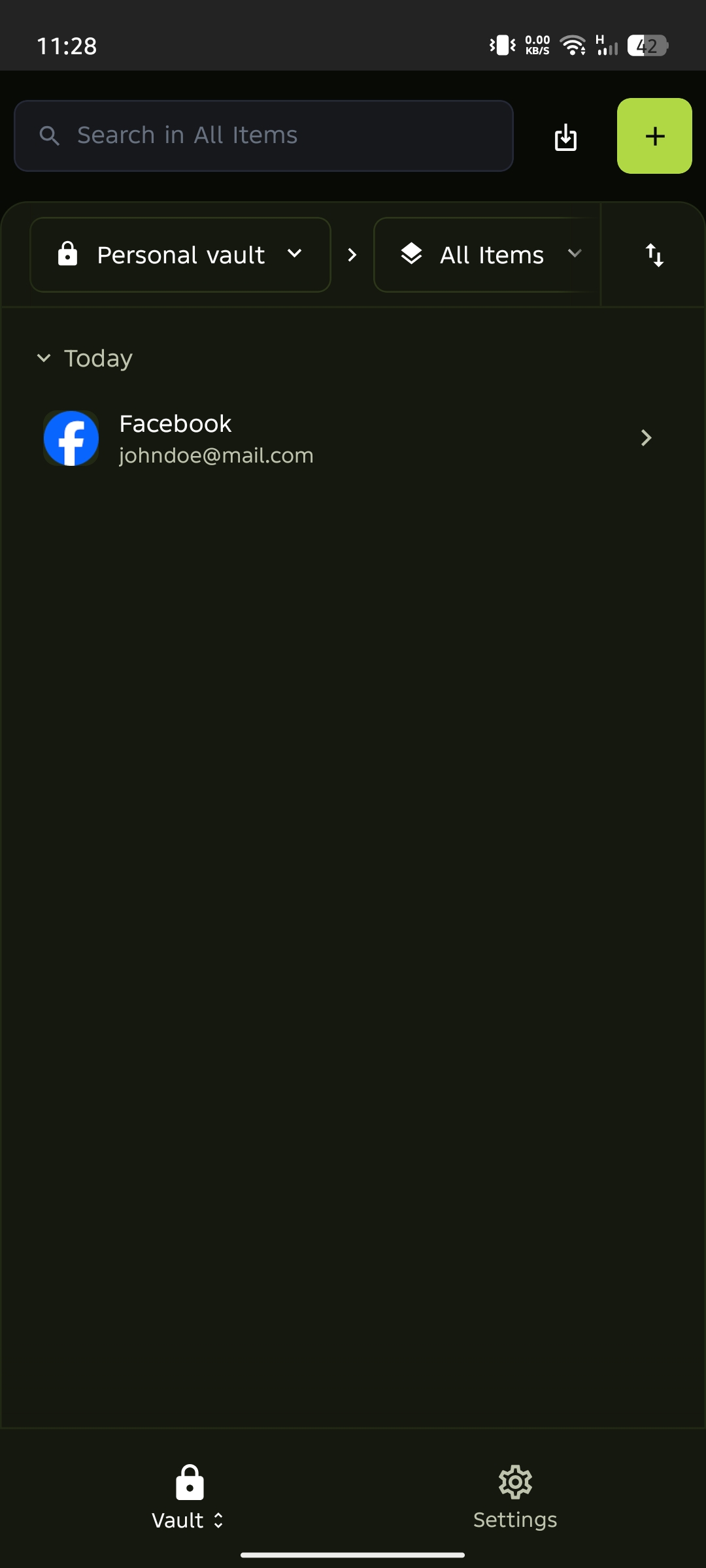
Open Settings
From the vault screen, tap the settings icon in the bottom menu.
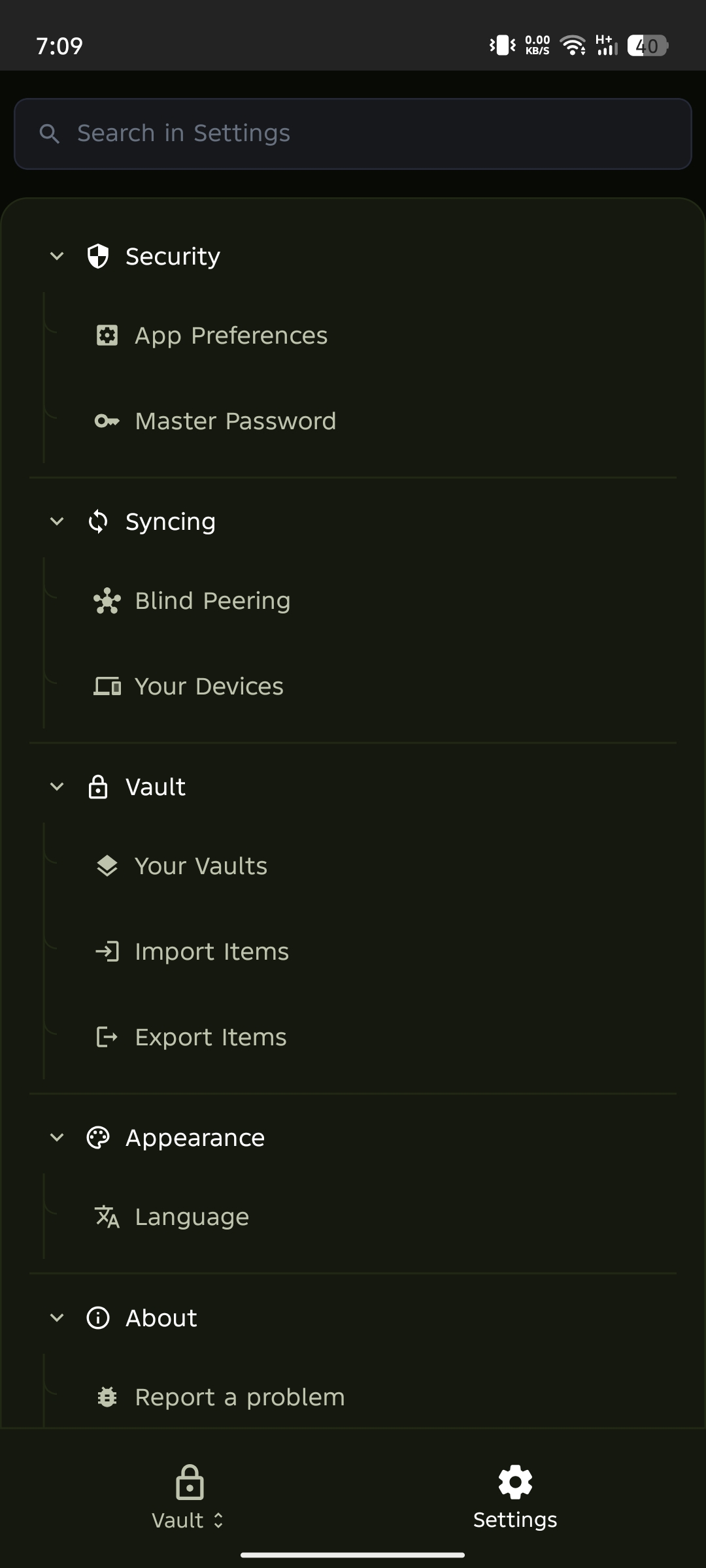
Select App Preferences
Tap App Preferences from the settings menu.
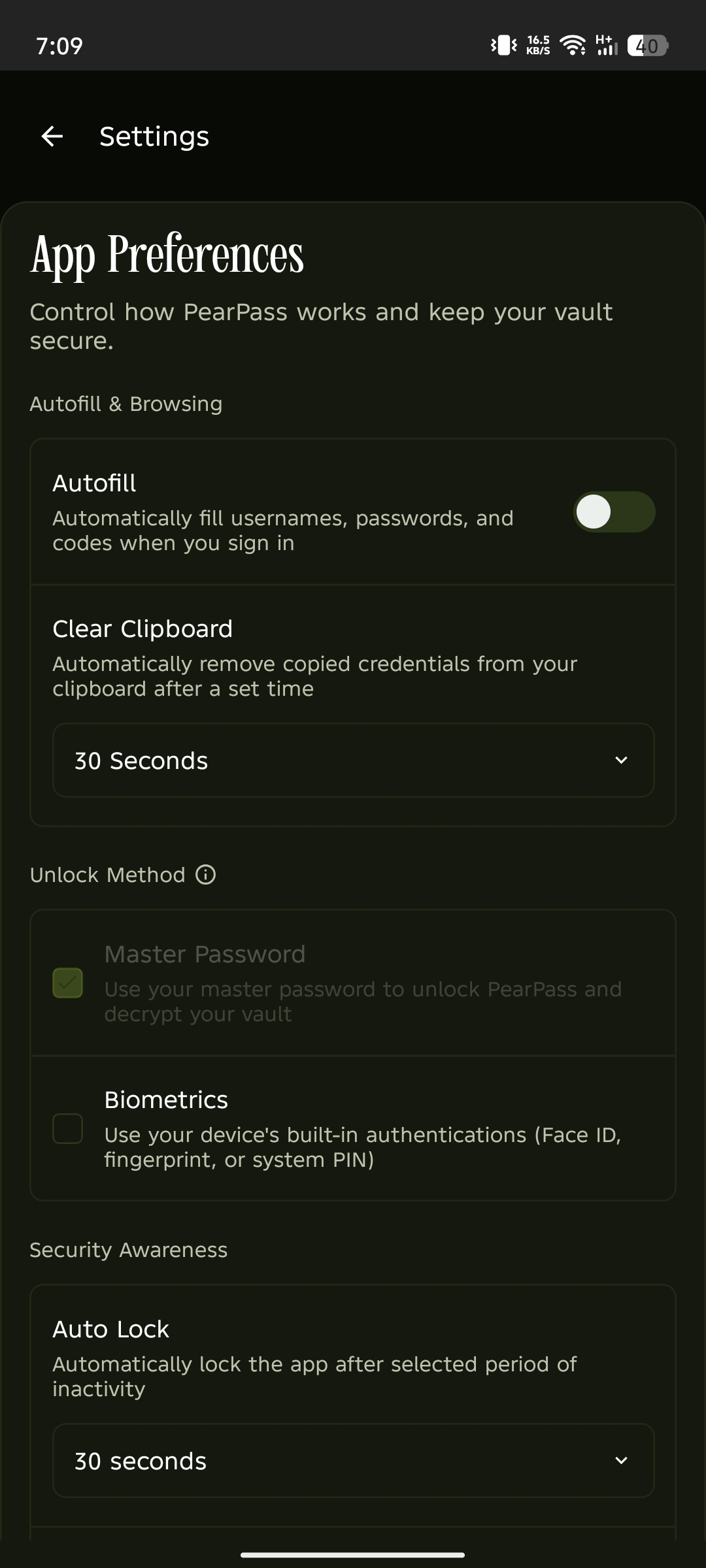
Set the Auto Lock timeout
Tap the Auto Lock dropdown and select the timeout that works for you.
What's next
- PearPass Functions: Full reference for all PearPass settings.
How To Save And Use Passkeys
Save passkeys from websites to your PearPass vault and use them to sign in, via the browser extension or on mobile.
References
Reference documentation for PearPass features and technologies, including search behavior, the Pear Runtime, supported import formats, and security settings.